
International Inheritances






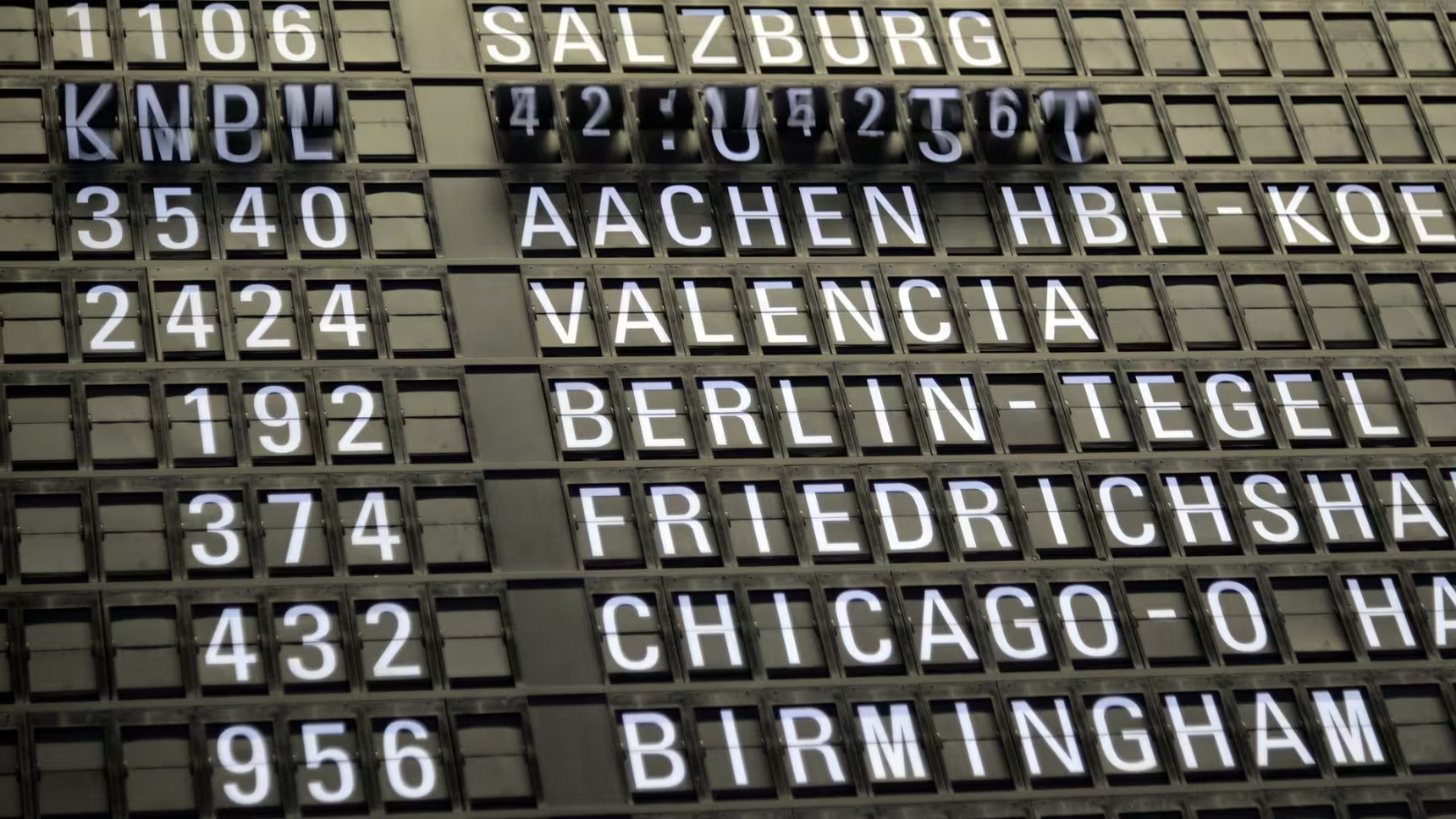














An inheritance can be considerably complicated when the deceased lived in one country, had another nationality, left assets in Spain or abroad and his heirs reside in different states. In an international inheritance , it is not enough to identify who inherits: before signing a deed, paying taxes or trying to register a property, it is necessary to determine which authorities can intervene, what legislation governs the succession and which documents will be admitted in each country.
At IN DIEM Abogados we intervene in successions with international connections, both when there is assets in Spain and when an inheritance processed from our country must produce effects abroad. This advice is based on the experience of the area of wills and inheritances and also requires the coordination of rules and actions of different jurisdictions.
When we are dealing with an international inheritance
A person’s foreign nationality is not the only element that makes a succession international. The problem arises when there are connections with several countries that can legally affect the inheritance.
- A foreign person dies leaving a home, accounts or other assets in Spain.
- A Spaniard dies with assets located outside the country.
- The heirs live in a State other than the one in which the assets are located.
- There is a will granted abroad that must be used in Spain.
- The deceased lived successively in several countries or had several nationalities.
- The succession documentation must produce effects before authorities of another jurisdiction.
In all these scenarios, it is advisable to avoid an automatic conclusion such as “the deceased was Spanish, so Spanish law applies” or “the property is in Spain, so the entire inheritance is processed in accordance with Spanish law”. Specific rules of private international law are involved in international successions.
What law applies to an international succession
Within the scope in which Regulation (EU) 650/2012 is applicable, the general rule connects the succession with the habitual residence of the deceased at the time of death. In addition, a person may, in compliance with the legal requirements, choose the law corresponding to his or her nationality to govern his or her succession.
Determining the applicable law can condition essential issues: who has inheritance rights, how the inheritance is distributed, what powers correspond to heirs or legatees and what effects a testamentary disposition produces. If there is an international will, several nationalities or recent changes of residence, this review must be carried out before taking for granted which inheritance regime corresponds.
Professional, personalised service throughout Spain.
The IN DIEM Law Firm has offices in Madrid, Seville, Málaga, and Las Palmas de Gran Canaria… as well as in other cities and towns. IN DIEM provides legal services throughout Spain and internationally, and offers online services. Every case is very important to us, and we handle each one with care and diligence.
Experience: Judges, Prosecutors, State Attorneys.
Abogados IN DIEM is a law firm staffed by professionals with extensive prior experience as judges, prosecutors, state attorneys, and university professors… who provide the peace of mind and assurance that come with having the best team—one that is competitive and highly qualified to achieve your goals and meet your needs.
Deceased foreigner with assets in Spain
One of the most common cases occurs when a person who lived outside Spain leaves a second home, a property, bank accounts, shares or other assets here. Often, in addition, the heirs do not reside in Spain either.
The procedure may require gathering foreign certificates, locating and analysing the will, checking the applicable inheritance law, preparing translations or apostilles when necessary, coordinating the notarial deed, attending to tax obligations and subsequently carrying out the corresponding registration or banking actions.
If the deceased did not make a will, the situation may require additional attention. When it is necessary to make a declaration of intestate heirs in Spain, notarial competence is subject to specific territorial rules. The last domicile or habitual residence, the place where most of the estate is located or the place of death may be relevant, among other criteria provided for by law. Locating the competent authority and obtaining the appropriate foreign documentation can thus become a substantial part of the process.
Can a Spanish inheritance be processed while living abroad?
In many cases, yes. The fact that the heirs reside outside Spain does not necessarily mean that they must travel in person for each action. Depending on the necessary procedures, the representation can be organized by means of a power of attorney, granted in Spain, before a consulate or before a foreign authority with the necessary formalities for it to produce effects here.
IN DIEM can coordinate these actions and centralise the relationship with notaries, registries, entities and other parties involved in Spain. This possibility is especially useful when the heirs have never resided in our country and the only connection with Spain is the estate left by the deceased.
Assets located abroad
The reverse scenario requires a different strategy. When a Spanish person or resident in Spain leaves assets in another State, certificates, inheritance documentation, apostilles, translations and other instruments necessary to prove the rights of the heirs can be prepared and coordinated from Spain.
However, this coordination should not be confused with the possibility of formalising any foreign transfer from Spain. When the adjudication or registration of a property, an account or other asset requires actions in accordance with the law of the country where it is located, the intervention of a local professional or authority may be necessary. Within our international legal advice services, we can organise this coordination and determine which part of the procedure can be carried out in Spain and which must be carried out in the other jurisdiction.
Foreign Documentation and European Certificate of Succession
A cross-border succession may involve death and birth certificates, civil status documents, wills, powers of attorney, certificates of last wills or succession titles issued outside Spain. Not all foreign documents can be used directly: depending on their origin and purpose, translation, apostille, legalisation or recognition requirements will have to be checked.
In certain European cases, the European Certificate of Succession may also be useful to prove in another Member State the status or rights of heirs, legatees, executors or administrators of the estate. Its necessity must be assessed within the specific procedure, not as an automatic procedure in all international succession.
Taxation of an international heritage
The determination of the civil law applicable to the succession does not in itself resolve its taxation. The European Inheritance Regulation excludes tax issues from its scope, so that the same inheritance may require a separate succession and tax analysis.
The residence of the deceased and heirs, the location of the assets and the corresponding Spanish regulations can influence tax obligations. When this dimension exists, the matter can be coordinated with the international taxation area, including Inheritance Tax and, when there are urban properties in Spain, the eventual municipal taxation that may apply.
Plan for succession before the problem exists
International inheritances should not be addressed solely after death. A person who resides outside their country of nationality or owns assets spread across multiple jurisdictions can review in advance what law might govern their future succession and how to coordinate their testamentary dispositions.
IN DIEM also advises in this preventive phase. The aim is to identify the international connections of the estate, review existing documents and prevent wills, decisions made in different countries or incompatible formalities from subsequently generating unnecessary difficulties for the heirs.
How we approach a succession with international connections
Not all actions can be carried out from the same country nor do all inheritances require the same documents. Our work begins by defining where the deceased resided, what nationality or nationalities they had, where the assets are located, where the heirs live and what inheritance provisions exist. Based on this information, we can order the processing in Spain and, when necessary, coordinate the actions that must be carried out before foreign professionals or authorities.
Give us a call.
Immediate attention & resolution. In Diem team.

Call us—we'll be happy to assist you… IN DIEM Emergency Service
IN DIEM Abogados makes available to its clients an urgent assistance service, operating 24 hours a day, for emergency situations, whether in criminal matters, contracting, litigation, or family matters.
In-person service
Our team of lawyers will see you in person in: Málaga, Madrid, Seville, Las Palmas de Gran Canaria, Huelva, Jerez, Cádiz; as well as Tomares, Mairena del Alcor, Mairena del Aljarafe, Coria del Río, Dos Hermanas, Estepona, and Marbella, among others.
Excellence
Extensive experience as Prosecutors, State Attorneys, Judges, University Lecturers, or high-level Trade Union Representatives, providing you with peace of mind and confidence.
Online service
IN DIEM provides assistance wherever you need it. National and international assistance. We assist via videoconference (through available applications such as Skype, GoToMeeting, or WhatsApp) and by telephone.
24-Hour Lawyers
Immediate legal assistance, 24 hours a day. Our team of lawyers is available to advise you and support you in any situation, providing fast, professional, and confidential assistance by phone, video call, or in person.
Frequently Asked Questions International Legal
Answers to frequently asked questions about international legal services, cross-border operations, corporate law, and global legal advisory.
What is considered an international inheritance?
There is an international element when the succession has relevant connections with more than one country: by the residence or nationality of the deceased, by the residence of the heirs, by the location of the assets or by the existence of documents granted in another jurisdiction.
If the deceased was a foreigner, does the law of his nationality always apply?
Not necessarily. In cases subject to Regulation (EU) 650/2012, the general rule is based on habitual residence at death, although there may be a valid choice of law corresponding to the nationality of the deceased and the specific circumstances of the succession must be reviewed.
Can a foreigner leave a property located in Spain as an inheritance?
Yes. The existence of a property in Spain requires the coordination of the applicable inheritance regulations with the necessary procedures so that the adjudication can produce effects on that property, in addition to reviewing the corresponding tax and registry obligations.
Do I have to travel to Spain to accept an inheritance if I live in another country?
Not always. In many successions it is possible to act through representation and grant a power of attorney from abroad, as long as it is prepared with the necessary formalities to be used in Spain. It is necessary to check beforehand what specific actions must be carried out.
What happens if a foreigner dies in Spain without a will?
It may be necessary to determine who the heirs are in accordance with the applicable inheritance law and to process the corresponding declaration of heirs where applicable. If it must be done before a Spanish notary, there are specific rules to determine which notary is territorially competent.
Is a will granted in another country valid in Spain?
It can produce effects in Spain, but it is necessary to analyse its validity, the applicable legislation and the necessary formalities to use it before Spanish authorities, notaries, registries or entities. Depending on the country of origin, translation, apostille or other documentary actions may also be necessary.
What is the European Certificate of Succession for?
It allows certain succession points in other Member States to be accredited in the cases included in the European Regulation, such as the status and rights of the heirs or the powers of certain participants in the succession. It is not mandatory or necessary in all international inheritances.
Can IN DIEM process from Spain a home inherited in another country?
We can analyse the succession from Spain, prepare or coordinate the necessary documentation and work with foreign professionals. However, if the transfer or registration of the property must be formalised in accordance with the legislation of the country where it is located, this action will have to be carried out there with the competent professionals or authorities.
How is an inheritance taxed when the heirs live outside Spain?
It depends, among other factors, on the residence of the persons involved, the location of the assets and the applicable tax rules. Taxation must be analysed separately from the civil law governing succession, because the two issues respond to different rules.
Legal Directors
, the In Diem Team.

Do you need help and a free initial consultation?
Schedule an initial consultation. In 60 minutes, we’ll provide you with an honest assessment, the available options, and the next steps.
An inheritance between several countries requires coordination more than documents
When a succession connects Spain with another country, before starting procedures it is advisable to determine which law is applicable, what documentation will be necessary and what actions can be carried out from Spain. At IN DIEM we can review the structure of the inheritance, coordinate Spanish procedures and organize the intervention of foreign professionals when the matter requires it.
Contact Us
Do you have any questions or comments?
Fill out the form below, and we’ll get back to you as soon as possible.