
Minor Detained | Juvenile Criminal Release and Defense
Minor Detained | Juvenile Criminal Release and Defense
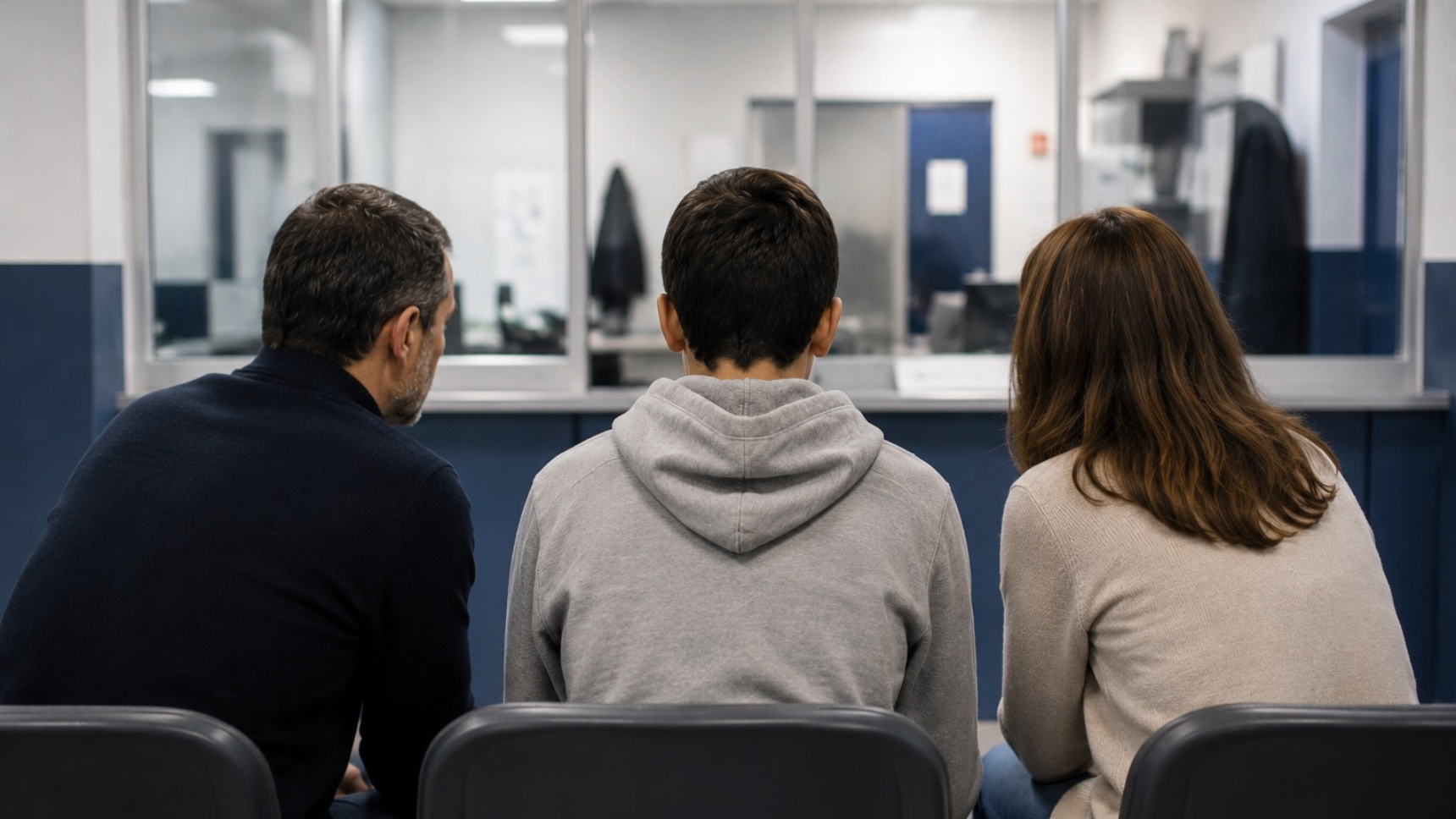





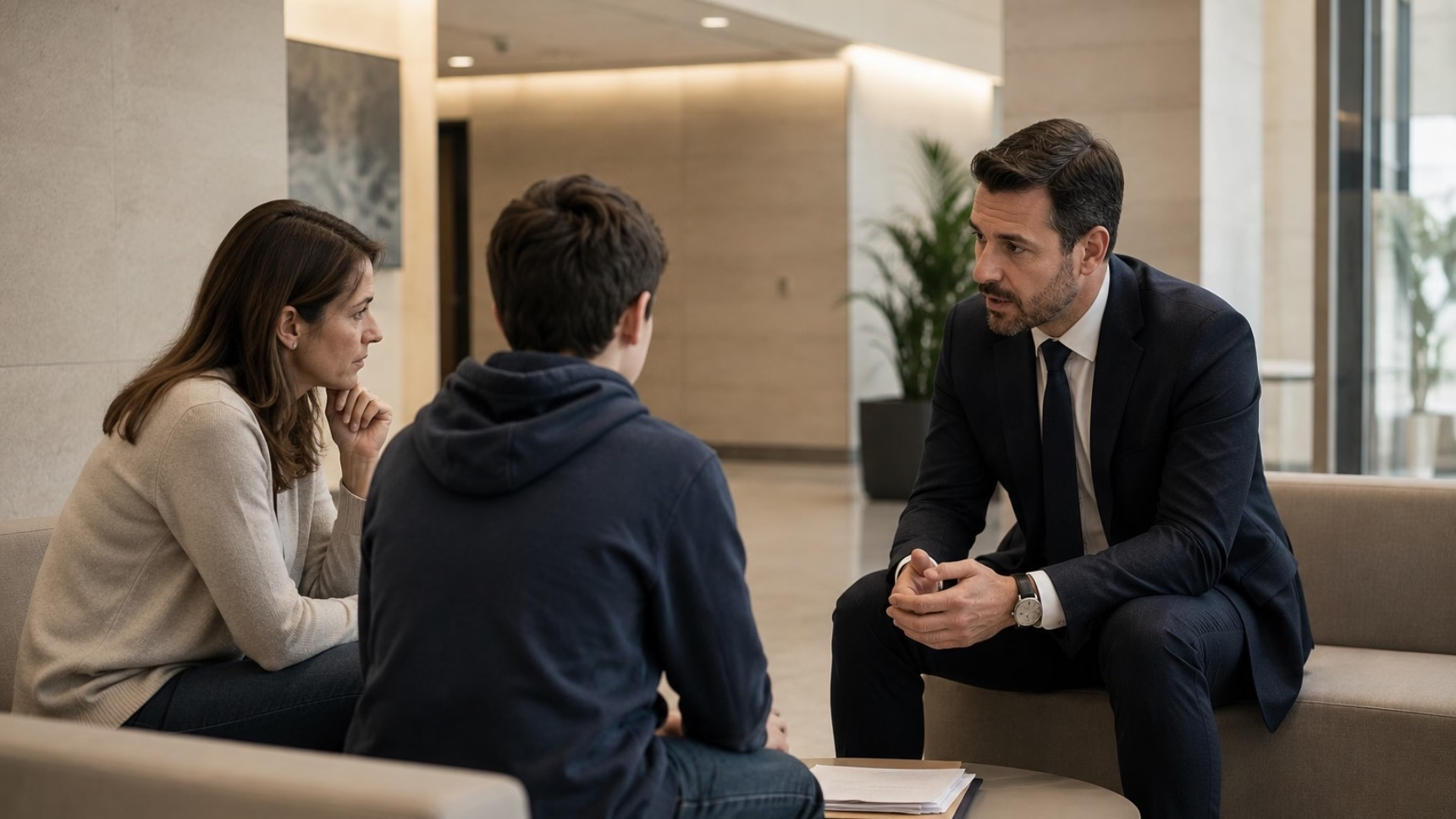
Has your minor child been arrested?
The arrest of a son raises immediate questions: where he is, how long he will remain in the police station, whether he can testify and what will happen next. If your minor child has been arrested, the priority is to know the reason, arrange for the minor’s legal assistance and protect his or her rights from the first action.
When the adolescent was between 14 and 17 years old when the events occurred, Organic Law 5/2000 applies. The detention of a minor follows a different procedure from that of adults, with the intervention of the Juvenile Prosecutor’s Office and specific guarantees.
My son has been arrested: what should I do now?
If your child is in the police station, it is advisable to confirm where he or she is, which police force has made the arrest and, where possible, what facts are being investigated. The family should not pressure him to admit or deny what happened or build a version before he receives advice from an attorney for a detained minor.
It is also important to keep messages, photographs, videos, locations, medical reports and any element related to the facts. Conversations should not be deleted, devices tampered with, or the complainant should not be contacted to ask them to withdraw the report or change their story.
Our team of juvenile criminal lawyers can intervene from this phase. When an immediate response is needed, action is coordinated with the detainee assistance service.
Does the minor have the right to a lawyer?
Yes. The intervention of a lawyer for a detained minor is not limited to accompanying him or her during the statement. The lawyer must verify the reason for the arrest, know the essential information, explain your rights and help you decide whether to testify or remain silent.
Choice of Attorney
The family can appoint a trusted attorney. If he does not do so, one will be appointed ex officio. In any case, the lawyer defends the minor and must act with priority to his rights and interests.
Reserved interview with the minor
The minor has the right to meet with his lawyer in confidence before and after testifying. This conversation allows you to know their version, explain what is being investigated and assess the consequences of answering, remaining silent or answering only certain questions.
Assistance during the deposition
The lawyer must be present to check that the questions and actions respect the legal guarantees, to record possible incidents and to avoid an incomplete or equivocal presentation of the facts.
Professional, personalised service throughout Spain.
The IN DIEM Law Firm has offices in Madrid, Seville, Málaga, and Las Palmas de Gran Canaria… as well as in other cities and towns. IN DIEM provides legal services throughout Spain and internationally, and offers online services. Every case is very important to us, and we handle each one with care and diligence.
Experience: Judges, Prosecutors, State Attorneys.
Abogados IN DIEM is a law firm staffed by professionals with extensive prior experience as judges, prosecutors, state attorneys, and university professors… who provide the peace of mind and assurance that come with having the best team—one that is competitive and highly qualified to achieve your goals and meet your needs.
Rights of a detained minor
Detention should be carried out in a manner that least harms the adolescent. He must be informed immediately, in clear language, of the facts attributed to him, the reasons for the arrest and his rights.
Among the main rights of a detained minor are to receive the assistance of a lawyer, to meet with him confidentially, to remain silent, not to testify against himself and not to confess guilt. The arrest and place of custody must be communicated to their legal representatives and to the Public Prosecutor’s Office. During custody, the minor must remain separate from adults.
Should the parents be present when the minor declares?
As a general rule, the declaration is made in the presence of the lawyer and those who exercise parental authority, guardianship or guardianship. The presence of parents may be excluded when there is a conflict of interest or one of the representatives is related to the facts.
How long can a minor be detained?
Police detention of minors may not be prolonged for longer than strictly necessary. Within a maximum of 24 hours, the minor must be released or placed at the disposal of the Juvenile Prosecutor’s Office.
If he is brought before the Public Prosecutor’s Office, the latter must decide within 48 hours of the initial moment of arrest whether to release him, initiate the file or request a precautionary measure. This period is not fully added to the first 24 hours.
Can the minor remain silent?
Yes. You may not testify, answer certain questions, or state that you will testify later. Keeping silent is not the same as acknowledging the facts. The decision must be taken after the reserved interview with the lawyer for the assistance of the detained minor.
What happens after the arrest?
Police
The police carry out the necessary procedures, inform the minor of his or her rights, notify the arrest and, where appropriate, receive a statement with the legal guarantees. He must then release him or place him at the disposal of the Prosecutor’s Office.
Juvenile Prosecutor’s Office
The Prosecutor’s Office is leading the investigation of the events attributed to people between 14 and 17 years of age. It can agree to archive, initiate a file, promote an out-of-court solution or request a precautionary measure.
Release
The minor may be released after police proceedings or by decision of the Public Prosecutor’s Office. This does not necessarily mean that the matter is over, as you may receive a subsequent summons.
Possible precautionary measures
The Public Prosecutor’s Office may request internment, probation, prohibition of approach or communication, or cohabitation with another person or educational group. The measure must be agreed by the Juvenile Court after hearing the lawyer and assessing the seriousness of the facts, the personal circumstances and their proportionality.
What happens if the arrest is due to a fight or aggression?
It is necessary to determine what each participant did, who initiated the confrontation, what injuries occurred and what evidence allows us to reconstruct what happened. The defense must analyze recordings, messages, witnesses and medical reports. Depending on the nature of the facts, its classification as
misdemeanors.
What happens if a sex crime is investigated?
These investigations require special caution. Ages, the relationship between the people involved, consent, communications and the possible existence of images must be analyzed. The family should not copy, forward, or manipulate intimate material, or contact the other person to reach informal agreements.
Why it is important to have a lawyer from detention
The first actions can condition the entire procedure. An inaccurate statement, deletion of messages, or an explanation offered without knowing the complaint can harm the defense. Having an urgent lawyer for minors allows you to prepare the statement, preserve evidence, control deadlines and anticipate the decisions of the Prosecutor’s Office.
If your child is detained, legal aid must be arranged from this point on.
Give us a call.
Immediate attention & resolution. In Diem team.

Call us—we'll be happy to assist you… IN DIEM Emergency Service
IN DIEM Abogados makes available to its clients an urgent assistance service, operating 24 hours a day, for emergency situations, whether in criminal matters, contracting, litigation, or family matters.
In-person service
Our team of lawyers will see you in person in: Málaga, Madrid, Seville, Las Palmas de Gran Canaria, Huelva, Jerez, Cádiz; as well as Tomares, Mairena del Alcor, Mairena del Aljarafe, Coria del Río, Dos Hermanas, Estepona, and Marbella, among others.
Excellence
Extensive experience as Prosecutors, State Attorneys, Judges, University Lecturers, or high-level Trade Union Representatives, providing you with peace of mind and confidence.
Online service
IN DIEM provides assistance wherever you need it. National and international assistance. We assist via videoconference (through available applications such as Skype, GoToMeeting, or WhatsApp) and by telephone.
24-Hour Lawyers
Immediate legal assistance, 24 hours a day. Our team of lawyers is available to advise you and support you in any situation, providing fast, professional, and confidential assistance by phone, video call, or in person.
Trends, Legal News, and Expertise


Frequently Asked Questions International Legal
Answers to frequently asked questions about international legal services, cross-border operations, corporate law, and global legal advisory.
How long can the detention of a minor last?
The detention of a minor must last only the time necessary to carry out the necessary procedures. In any case, within a maximum of 24 hours the minor must be released or placed at the disposal of the Juvenile Prosecutor’s Office.
Can a minor testify without a lawyer?
No. A detained minor may not give a statement without the assistance of a lawyer. In addition, you have the right to meet privately with your lawyer before and after testifying to learn about your situation and decide how to exercise your rights.
Can the family choose a lawyer?
Yes. The family may appoint a lawyer for a trusted detained minor . If this appointment is not made, a court-appointed lawyer will be appointed. In any case, the professional must act with priority given to the rights and interests of the child.
Can parents be present at the return?
As a general rule, the declaration is made in the presence of the lawyer and those who exercise parental authority, guardianship or guardianship. The presence of parents may be excluded when there is a conflict of interest or circumstances that make it inadvisable.
Can the police arrest a child under 14 years of age?
Minors under 14 years of age are not criminally liable under the legislation on criminal responsibility for minors. The police may intervene to identify the minor, protect him or hand him over to his or her legal representatives, but juvenile criminal proceedings are not instituted against him.
What happens after going to the police station?
The minor may be released or placed at the disposal of the Juvenile Prosecutor’s Office. The Public Prosecutor’s Office will assess the facts and may agree to archive, initiate a file, promote an out-of-court solution when possible or request a precautionary measure.
Can the minor be released?
Yes. The police detention of a minor does not imply that a precautionary measure should be imposed. He may be released after police proceedings or by decision of the Public Prosecutor’s Office, even if he or she subsequently receives a summons to continue the proceedings.
Can the internment of a minor be agreed?
Yes, but only by resolution of the Juvenile Court and when the legal requirements are met. In order to decide on this, the seriousness of the facts, the personal and social circumstances of the adolescent, the existing risks and the proportionality of the measure must be assessed.
What if my child recognizes the facts?
Recognition may have relevant consequences for the juvenile’s criminal defence. Before making any statement, he must know what facts are being investigated, what evidence exists and what effects his statement may produce within the procedure.
Is it convenient for the minor to testify immediately?
Not always. In some cases, it may be appropriate to testify and, in others, to exercise the right to remain silent. The decision must be taken after the minor has had a confidential interview with his or her children’s lawyer and the available information has been analysed.
Has your youngest son been arrested?
Know your rights, what will happen at the police station and how a lawyer specialising in Juvenile Criminal Law can intervene. If your child is detained, legal aid must be arranged from this point on.
Legal Directors
, the In Diem Team.



Do you need help and a free initial consultation?
Schedule an initial consultation. In 60 minutes, we’ll provide you with an honest assessment, the available options, and the next steps.
Contact Us
Do you have any questions or comments?
Fill out the form below, and we’ll get back to you as soon as possible.
Call us at (+34) 954 270 522 or fill out our form, and we will get in touch with you.