
Minor Reported: What to Do | Lawyers
Minor Reported: What to Do | Lawyers



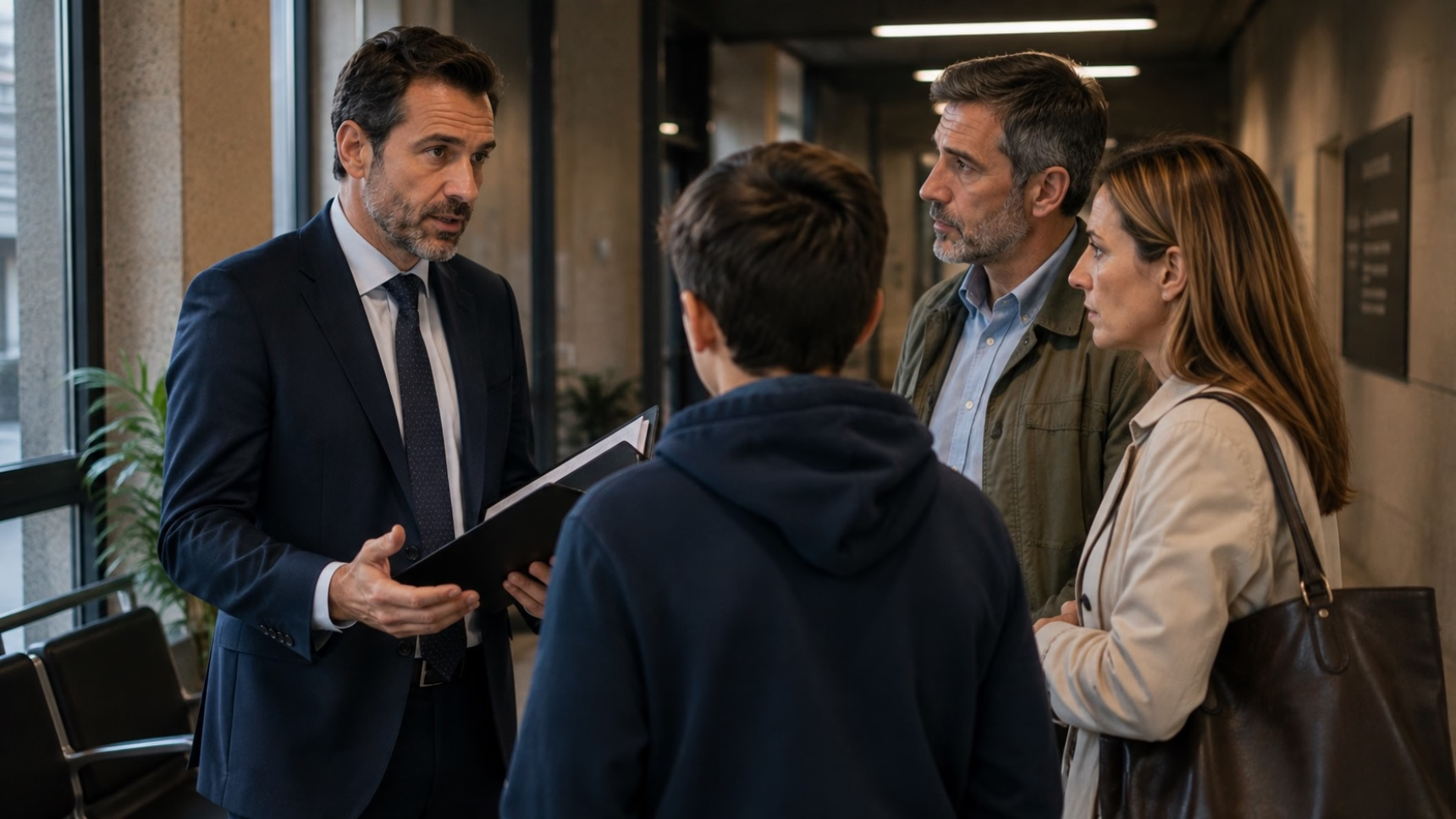
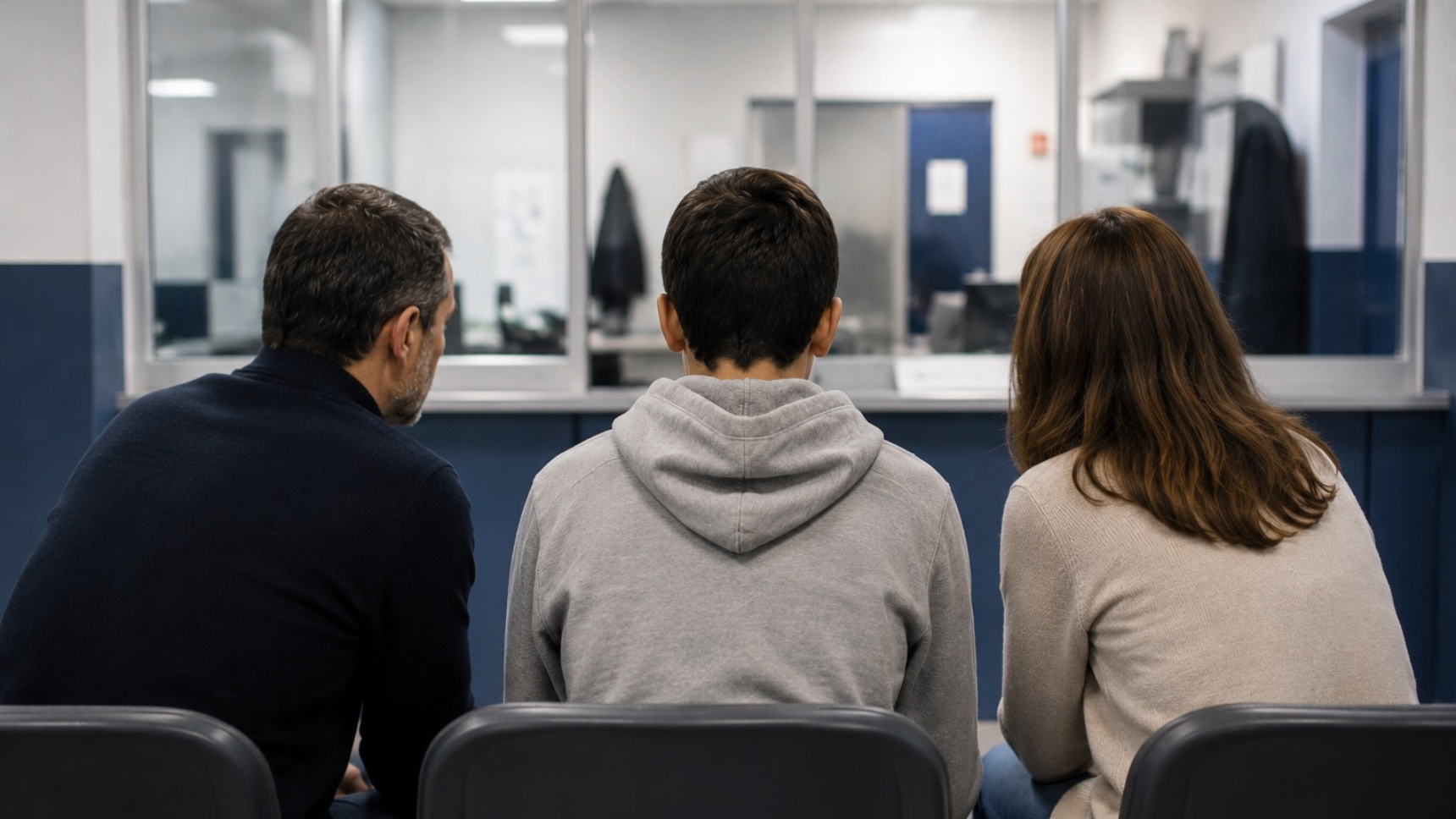

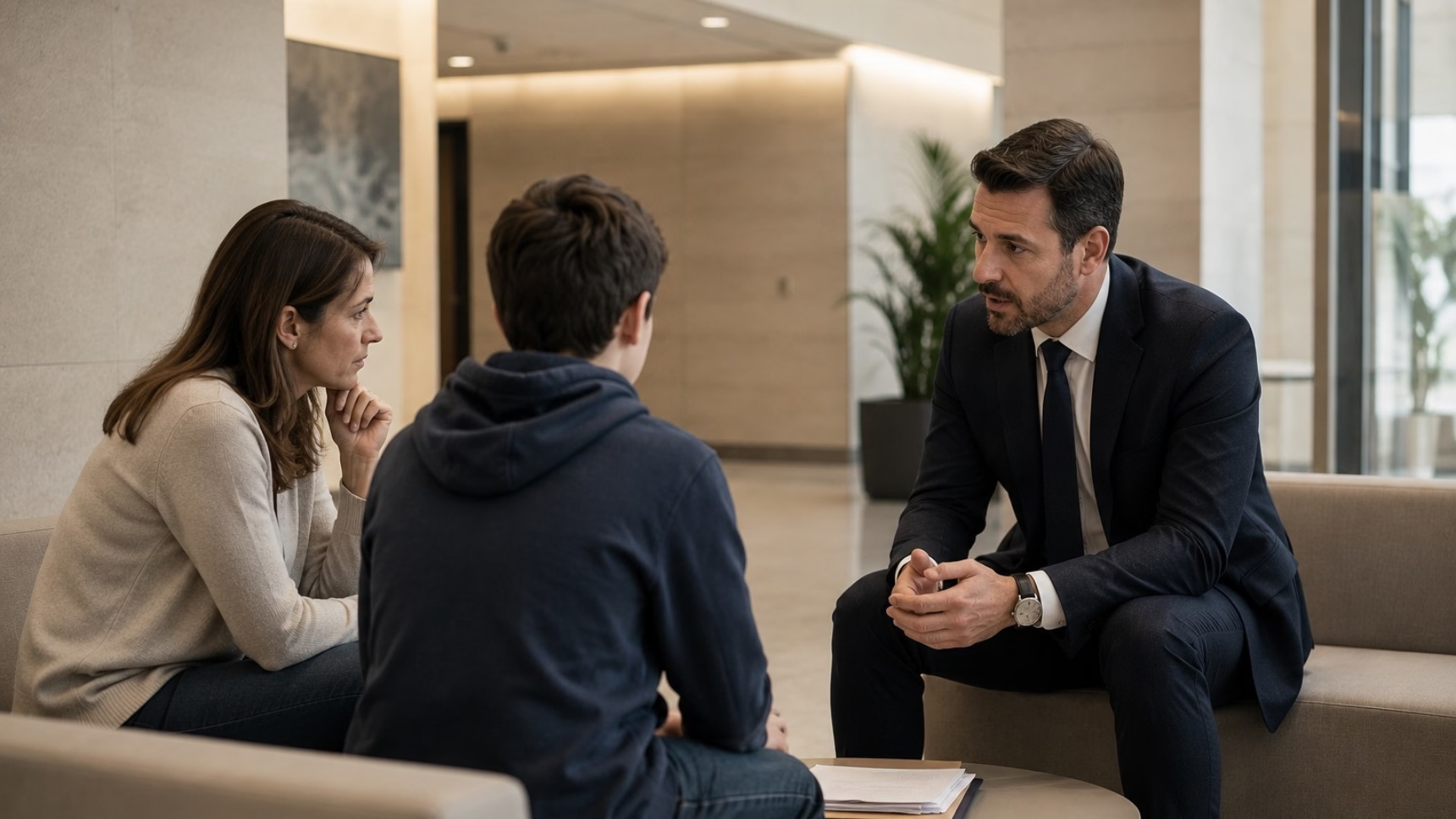
My minor son has been denounced: what should we do?
Receiving a call from the Police, a summons from the Prosecutor’s Office or knowing that there is a complaint against a minor generates immediate concern. It is common for the family to want to know who has made a complaint, what facts are attributed to the adolescent, whether they must testify and what consequences the procedure may have.
At this point, it is advisable to avoid hasty decisions. The fact that there is a minor reported does not mean that the facts are proven or that the adolescent is responsible. Before adopting a strategy, it is necessary to know the complaint, analyze the evidence and legally prepare any statement.
What happens when a minor is reported?
When the facts are attributed to a person who was between 14 and 17 years old at the time of the fact, Organic Law 5/2000 applies.
The complaint may lead to police proceedings and subsequently to an investigation led by the Juvenile Prosecutor’s Office.
Our team of juvenile
criminal lawyers can intervene from this stage to learn the facts, study the evidence and organize the defense of the minor under investigation before he or she appears before the Police or Prosecutor’s Office.
A complaint does not mean that the minor is guilty
A complaint is the story by which the authorities are informed of the possible commission of a crime. On the basis of this, the facts must be investigated and it must be verified whether there are sufficient elements to attribute responsibility to the minor accused of a crime.
In conflicts between adolescents there may be contradictory versions, incomplete videos, fragmented conversations or different interpretations of the same situation. Therefore, the defense should not be built only on what the child remembers or on the first version known to the family.
What to do before the minor testifies?
The first statement may condition the subsequent development of the juvenile criminal proceedings. Preparing it does not mean telling the adolescent what to say, but rather allowing him to know the facts investigated, his rights and the consequences of testifying or remaining silent.
Get information about the report
The first thing is to know why the minor is summoned, in what condition he appears and what facts are being investigated. A police call is not the same as a formal summons as a minor under investigation or an appearance before the Prosecutor’s Office.
Analyze existing evidence
Messages, videos, photographs, locations, medical reports and testimonies can be decisive. The family should retain the original information and avoid deleting conversations, editing files, or contacting the complainant.
Professional, personalised service throughout Spain.
The IN DIEM Law Firm has offices in Madrid, Seville, Málaga, and Las Palmas de Gran Canaria… as well as in other cities and towns. IN DIEM provides legal services throughout Spain and internationally, and offers online services. Every case is very important to us, and we handle each one with care and diligence.
Experience: Judges, Prosecutors, State Attorneys.
Abogados IN DIEM is a law firm staffed by professionals with extensive prior experience as judges, prosecutors, state attorneys, and university professors… who provide the peace of mind and assurance that come with having the best team—one that is competitive and highly qualified to achieve your goals and meet your needs.
Legally prepare the declaration
It is not always convenient to answer all questions immediately. The minor has the right to have a lawyer for a juvenile defendant, to meet confidentially with him or her and to receive advice before testifying. The decision should be made after analysing the available information and the defence strategy.
Choose a lawyer
The juvenile jurisdiction has its own rules. Having a lawyer for a minor reported allows the intervention of the Public Prosecutor’s Office, the investigation proceedings, the report of the technical team and the possible legal consequences to be assessed from a specialized perspective.
Who investigates a complaint against a minor?
The Juvenile Prosecutor’s Office is leading the investigation to determine whether there is criminal responsibility of a person between 14 and 17 years of age. He or she may carry out errands, request information and obtain a report from the technical team on the personal, family, educational and social circumstances of the adolescent.
What rights does a minor under investigation have?
A minor under investigation has the right to know the facts attributed to him, to appoint a lawyer, to meet him confidentially, to intervene in the investigative proceedings, to request useful actions for his defence and to exercise his right not to testify against himself.
Can the procedure be archived?
Yes. A complaint against a minor does not necessarily lead to trial. The file may be archived when there is insufficient evidence or when any of the legal assumptions that allow the procedure not to continue are present.
Can the matter be solved without going to trial?
In certain cases, the legislation allows solutions based on conciliation, reparation of damage or educational activities. Its application depends on the seriousness and specific circumstances of the case, so it is not advisable to attempt private agreements without prior advice.
What happens if the complaint refers to a fight?
In fights between adolescents, it is essential to determine who started the confrontation, what each participant did and what injuries occurred. Recordings, messages, witnesses and medical reports must be analyzed. Depending on the nature of the facts, their classification as misdemeanours may also be relevant.
What happens in the event of a complaint of sexual assault?
These investigations require special caution. Ages, consent, previous relationship, communications, and any digital content related to the events should be analyzed. The family should not contact the complainant or forward photographs, videos or intimate conversations.
What happens if the minor is accused of bullying?
Bullying is not in itself a single crime. Depending on the facts, threats, coercion, injury, damage, degrading treatment or attacks on privacy may be investigated. The defence of the minor under investigation must individualise the conduct and differentiate between school conflicts and actions that may have criminal relevance.
What consequences can it have for parents?
A complaint against the child does not imply criminal liability of the parents. However, if damage is proven, there may be a civil liability claim. Therefore, it is advisable to study the possible compensation, the legal situation of the parents and the existence of insurance that can offer coverage.
Defence of the minor from the beginning of the investigation
An effective defense begins before the first deposition. Knowing the complaint, correctly preserving the evidence, avoiding inappropriate contacts and deciding when and how to testify can influence the outcome of the file.
IN DIEM addresses these matters from the specialization of our criminal lawyers, adapting the strategy to the particularities of the juvenile criminal procedure and keeping the family informed during each phase.
One of the most important decisions comes before the first statement. Check the case before the minor appears before the police or prosecutor’s office.
Give us a call.
Immediate attention & resolution. In Diem team.

Call us—we'll be happy to assist you… IN DIEM Emergency Service
IN DIEM Abogados makes available to its clients an urgent assistance service, operating 24 hours a day, for emergency situations, whether in criminal matters, contracting, litigation, or family matters.
In-person service
Our team of lawyers will see you in person in: Málaga, Madrid, Seville, Las Palmas de Gran Canaria, Huelva, Jerez, Cádiz; as well as Tomares, Mairena del Alcor, Mairena del Aljarafe, Coria del Río, Dos Hermanas, Estepona, and Marbella, among others.
Excellence
Extensive experience as Prosecutors, State Attorneys, Judges, University Lecturers, or high-level Trade Union Representatives, providing you with peace of mind and confidence.
Online service
IN DIEM provides assistance wherever you need it. National and international assistance. We assist via videoconference (through available applications such as Skype, GoToMeeting, or WhatsApp) and by telephone.
24-Hour Lawyers
Immediate legal assistance, 24 hours a day. Our team of lawyers is available to advise you and support you in any situation, providing fast, professional, and confidential assistance by phone, video call, or in person.
Trends, Legal News, and Expertise

Frequently Asked Questions International Legal
Answers to frequently asked questions about international legal services, cross-border operations, corporate law, and global legal advisory.
What happens if a minor is reported?
A complaint against a minor may lead to police proceedings and, where appropriate, an investigation led by the Juvenile Prosecutor’s Office. The existence of a complaint does not mean that the facts are proven or that the minor is guilty.
What if my child is under 14?
If you were under 14 years of age at the time of the facts, you are not held criminally liable under juvenile law. However, the Public Prosecutor’s Office can transfer the situation to the public protection entity so that it can assess whether it is appropriate to adopt any measure.
What if he is 14, 15, 16 or 17 years old?
If the adolescent was between 14 and 17 years old at the time of the facts, juvenile criminal procedure may apply. The relevant age is the age he was when the crime was allegedly committed.
Do you need a lawyer before you testify?
Yes. A minor under investigation must be assisted by a lawyer before giving a statement. The lawyer can analyse the complaint, review the available information and interview the minor confidentially to prepare for his or her appearance.
Can he refuse to testify?
Yes. A minor has the right not to testify against himself or herself and not to confess guilt. The advisability of testifying or remaining silent must be decided with your lawyer for the minor defendant after assessing the specific circumstances of the case.
Can parents be present?
The legislation recognizes the minor’s affective and psychological assistance during the procedure. The presence of parents or legal guardians will depend on the type of action and the specific circumstances, especially if there is a conflict of interest.
Who is investigating the case?
The Juvenile Prosecutor’s Office leads the investigation when the facts are attributed to a person between 14 and 17 years old. He or she may carry out proceedings, collect evidence and request the intervention of the technical team to assess the personal, family and educational circumstances of the minor.
Can a complaint against a minor be withdrawn?
The withdrawal of a complaint does not necessarily imply that the proceedings against the child are terminated. Depending on the crime investigated, the Public Prosecutor’s Office may continue the proceedings even if the complainant states that he or she does not wish to go ahead.
Can the file be archived?
Yes. The file may be archived when there is insufficient evidence, the facts do not constitute a crime or any of the legal assumptions that allow the procedure not to continue are present.
Can it be resolved without a trial?
In certain cases, yes. Legislation on minors allows solutions such as conciliation, reparation of damage or certain educational activities to be assessed. Its application depends on the seriousness of the facts and the specific circumstances of the case.
What background information can it generate?
A final decision in the juvenile jurisdiction may lead to the corresponding entry in the specific register provided for judgments of juvenile criminal responsibility. Its regime is not identical to that of adult criminal records and must be analysed on a case-by-case basis.
Will parents have to pay compensation?
If it is proven that the minor has caused damage, there may be civil liability. The legislation contemplates the possible liability of the minor together with his parents, guardians, foster parents or guardians, so it is also advisable to analyse the possible existence of insurance that covers compensation.
Have you reported your youngest son?
One of the most important decisions comes before the first statement. Check the case before the minor appears before the police or prosecutor’s office.
Legal Directors
, the In Diem Team.



Do you need help and a free initial consultation?
Schedule an initial consultation. In 60 minutes, we’ll provide you with an honest assessment, the available options, and the next steps.
Contact Us
Do you have any questions or comments?
Fill out the form below, and we’ll get back to you as soon as possible.
Call us at (+34) 954 270 522 or fill out our form, and we will get in touch with you.