

BANKING: Abusive Default Interest.
Area: Banking Law
Date: February, 2015
Reductions and Bonuses for Self-Employed Contributions. 2015.
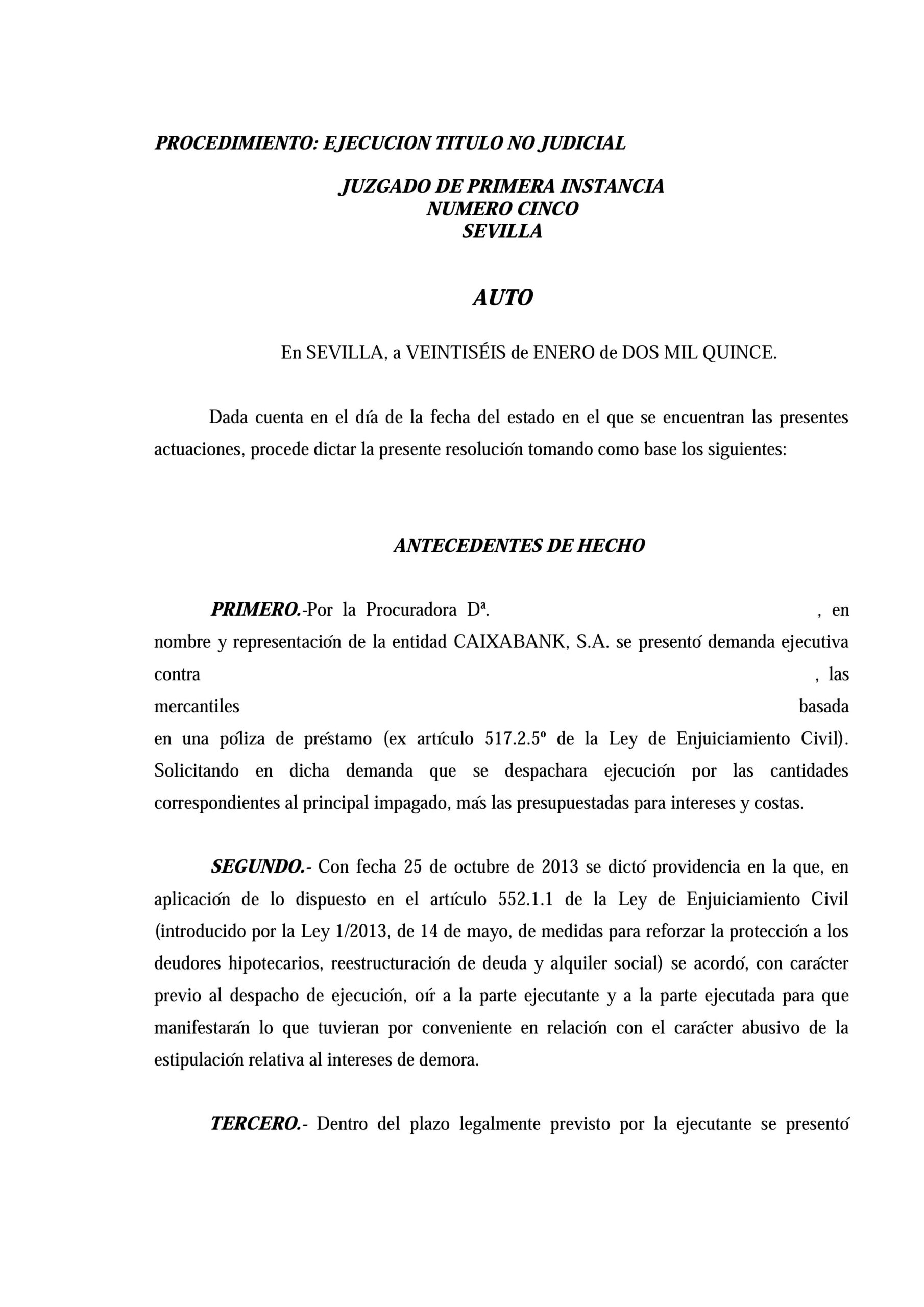
IN DIEM Abogados obtains a judicial ruling that not only declares clauses relating to default interest unlawful, but directly reproaches LA CAIXA for the intolerance by law and the courts of the contractual conditions imposed by the financial institution.
Indeed, the COURT recalls that in relation to default interest, without forgetting that there is a doctrinal and jurisprudential trend (Supreme Court Judgment of October 2, 2001, among many others, the latter cited in the order of Section 19 of the Provincial Court of Barcelona of December 19, 2012, and judgment of the same Section of April 7, 2013), according to which, when default interest is concerned, its accrual occurs due to prior legally reprehensible conduct by the debtor and its application serves both to compensate, without the complication of exhaustive and complete proof, the damage that the creditor has received, and to constitute an incentive that encourages the obligor to voluntary compliance, given the reality and severity of the harm caused by non-payment or default, from which it follows that the concept of high and coercive interest appears justified.
However, the ruling continues:
“But it is no less true that from this it cannot be concluded that there are no tolerance levels, so that any type of penalty interest is lawful without the possibility of applying corrective measures.”
In this regard, it is noted:
“This is a problem, as so many in the legal field, of compatibility, of proportionality between principles, those that tend to protect those who lend money and who are harmed in the manner and extent set forth above and must obtain adequate compensation, and those who incur default through delay, in this case consumers, who cannot be burdened beyond what is reasonable in light of the circumstances and the criteria that may be directly or indirectly extracted from the legal system itself.”
The judicial ruling is direct and, prior to the admission of the banking institution’s claim, proceeds to declare the default interest null and void, balancing the negotiating position between the banking institution and the consumer.


About Post Author
